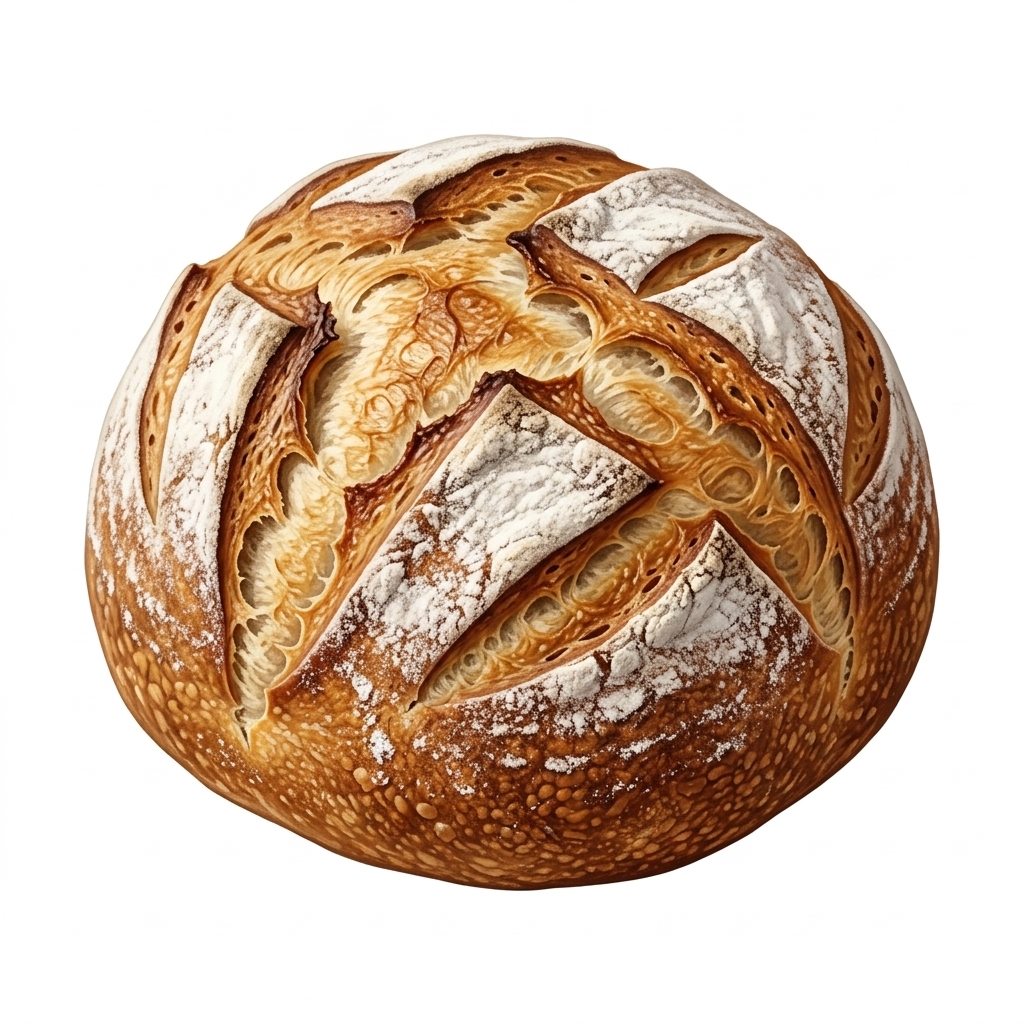
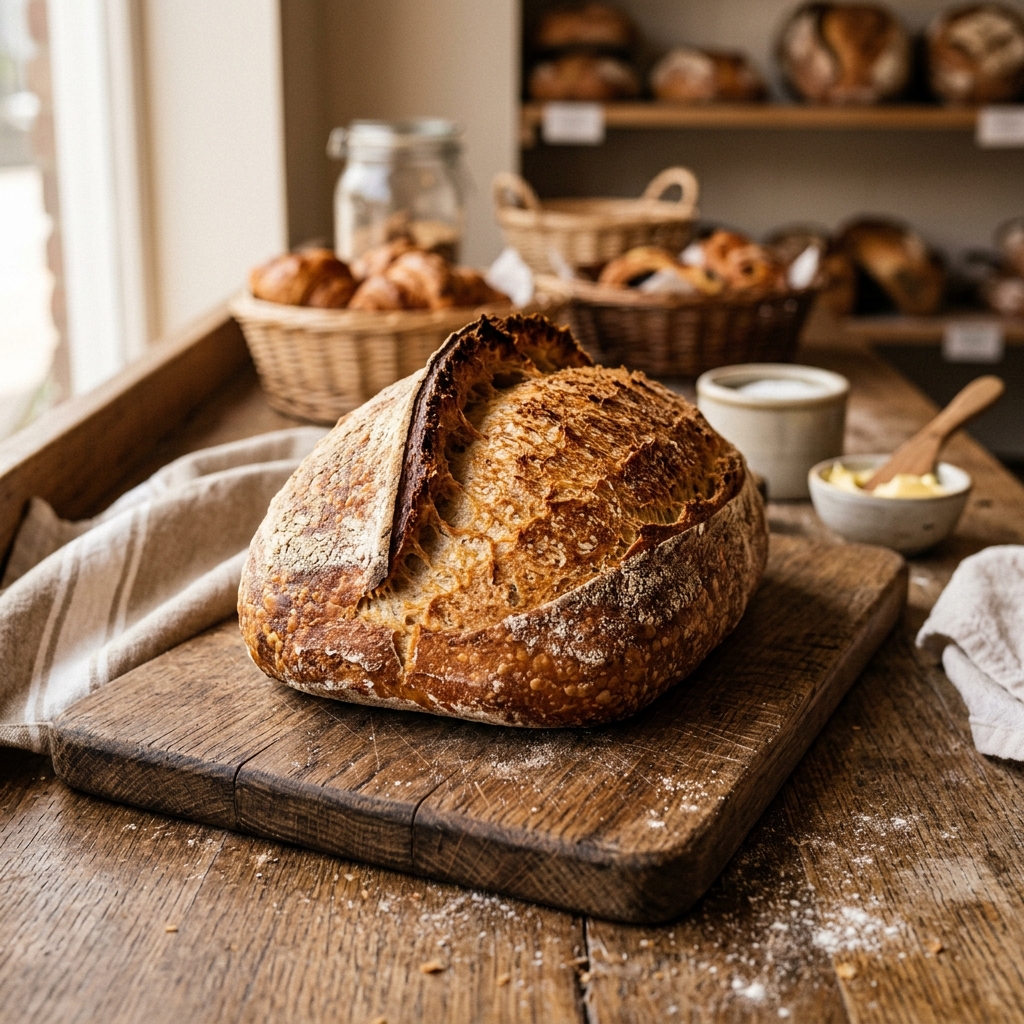
There’s nothing quite like pulling a fresh loaf of sourdough out of the oven, and seeing that beautiful, pronounced ridge of crust standing tall. That ridge is what bakers affectionately call an “ear.” But getting an ear isn’t just about luck; it’s the result of a few crucial techniques working together in harmony.
Why Do We Score Bread?
Scoring isn’t just decorative! When bread hits the hot oven, the gases trapped inside expand rapidly—a process known as oven spring. If you don’t score the dough, it will burst open at its weakest points, creating a misshapen loaf. Scoring creates a deliberate weak point, guiding the expansion.
1. The Angle of the Blade
The secret to the ear starts with the angle of your lame (or razor blade). If you score straight down at a 90-degree angle, the dough will simply open up into a wide, flat cut. To get an ear, you need to score at a shallow angle—about 30 to 45 degrees relative to the surface of the dough. Think of it like slipping the blade just under the skin of the dough, rather than cutting down into it.
2. Tension is Everything
You can’t get a good ear if your dough is a puddle. Proper shaping creates tension on the surface of the dough. This tight outer “skin” is what eventually peels back to form the ear when you score it. When shaping, make sure you build enough tension that the dough holds its shape firmly before going into the banneton.
3. Steam, Steam, Steam
An ear cannot form if the crust hardens too quickly. Steam keeps the surface of the dough pliable during the first 15-20 minutes of baking, allowing it to fully expand and that little flap of dough to lift up and peel back. Baking in a preheated Dutch oven or adding steam to your home oven is absolutely critical.
4. Cold Dough Scores Better
If you’ve ever tried to score room-temperature dough, you know it can be a sticky, dragging mess. Scoring dough straight out of the fridge after a cold retard is infinitely easier. The cold dough is firm, allowing for a clean, decisive cut.
Don’t be discouraged if you don’t get a massive ear on your first try! Pay attention to your shaping tension and the angle of your blade, and you’ll be baking picture-perfect artisan loaves in no time.
Shop the Tools for Sourdough Baking
Sourdough baking is a labor of love, but having the right tools makes all the difference. Here are the tools you’ll need to master that perfect ear:
- Bread Lame: The absolute most important tool for achieving an ear. A sharp razor allows for clean, shallow cuts. Get my recommended bread lame here.
- Baking Stone: A pre-heated stone provides the intense bottom heat needed for explosive oven spring. This is the one I use.
- Proofing Baskets: Proper shaping creates the tension needed for an ear, and bannetons hold that tension perfectly. Get round baskets or oval baskets.
- Bread Proofer: Ensures your dough ferments consistently, leading to better structure. Buy my recommended bread proofer here.
Disclaimer: As an affiliate, I may earn a small commission from purchases made via these links, which helps keep ‘Daz Bakes Bread’ rising!


